
INSTRUCTIONAL GUIDE FOR AMERICAN RAILROAD
A Social Science and ELA-based instructional guide is designed for 6th-8th grade classrooms.
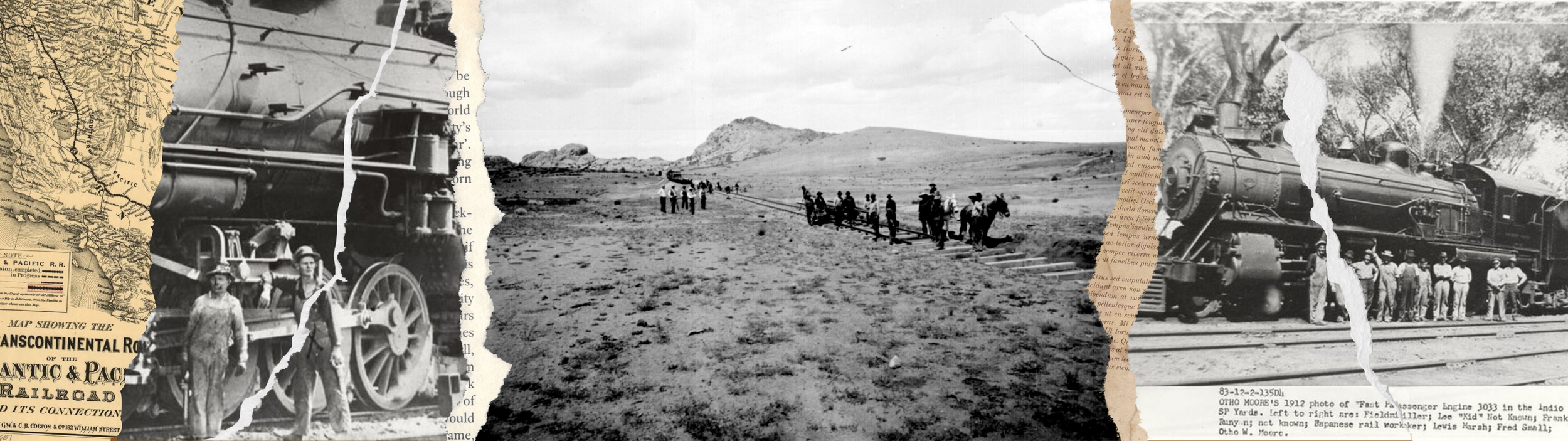
Welcome to the Silkroad American Railroad Instructional Guide. We are excited to share this Social Science and ELA-based instructional opportunity with you and your students in order to bring accurate historical information regarding the development of the Transcontinental Railroad during western expansion in the United States.
This Instructional Guide presents 11 lessons addressing the impact of the railroad’s progress on individuals and groups vital to the success of this national endeavor. The lessons also present realistic experiences, many of which have been overlooked and misrepresented.
The American Railroad Unit is standard-based, with an emphasis on ELA and Social Science for middle school students. The Enduring Understanding—Students understand that progress has varying impacts on the people and cultures it touches—is the foundation that unifies each lesson. Each lesson, then, is designed to be integral to the unit outcome and relies upon the previous lesson(s), ensuring clarity of the day’s learning and the instructional journey.
Each lesson relies on key reading, critical thinking, processing, collaboration, communication, creativity, and reflection. Relevant text is incorporated to develop language and content knowledge, while infusing language and concept development within each lesson. The lesson structure progresses in a logical order, putting strategies in their most relevant and intentional instructional place. This design clarifies the learning expectation in order to support transparency and student success. Literacy is based on a student’s ability to read independently, comprehend, and respond to grade level materials.
Therefore, students engage in reading daily both independently and with partners, and the reading approach is consistent throughout the unit in order to develop competence, confidence, and endurance. Our goal is to expose students to primary sources and accounts of these life-altering events in human history.
We appreciate your commitment to bringing these historically significant events to your students.
COMMON CORE STANDARDS
Priority Standards: Reading
Key Ideas and Details
• Read closely to determine what the text says explicitly and to make logical inferences from it; cite specific textual evidence when writing or speaking to support conclusions drawn from the text.
• Determine central ideas or themes of a text and analyze their development; summarize the key supporting details and ideas.
• Analyze how and why individuals, events, and ideas develop and interact over the course of a text.
Integration of Knowledge and Ideas
• Analyze how two or more texts address similar themes or topics in order to build knowledge or to compare the approaches the authors take.
Range of Reading and Level of Text Complexity
• Read and comprehend complex literary and informational texts independently and proficiently.
Priority Standards: Writing
Text Types and Purposes
• Write arguments to support claims in an analysis of substantive topics or texts, using valid reasoning and relevant and sufficient evidence.
• Write informative/explanatory texts to examine and convey complex ideas and information clearly and accurately through the effective selection, organization, and analysis of content.
Research to Build and Present Knowledge
• Conduct short as well as more sustained research projects based on focused questions, demonstrating understanding of the subject under investigation.
Range of Writing
• Write routinely over extended time frames (time for research, reflection, and revision) and shorter time frames (a single sitting or a day or two) for a range of tasks, purposes, and audiences.
Priority Standards: Speaking and Listening
Comprehension and Collaboration
• Prepare for and participate effectively in a range of conversations and collaborations with diverse partners, building on others’ ideas and expressing their own clearly and persuasively.
Presentation of Knowledge and Ideas
• Present information, findings, and supporting evidence such that listeners can follow the line of reasoning and the organization, development, and style are appropriate to task, purpose, and audience.
SAMPLE LESSONS
Listening Exercise
My Music with Rhiannon Giddens | Season 2, Episode 1
Season 2 of PBS’s My Music with Rhiannon Giddens uses the American Transcontinental Railroad as the metaphor of a route rich with cultural influences and cross-cultural conversations among workers and communities affected by the construction. Students will watch Episode 1 of Season 2, featuring an interview and performance between Silkroad Artistic Director Rhiannon Giddens and pipa virtuoso/founding Silkroad member Wu Man, analyzing how music and musical instruments transform through human migration and cultural exchanges.
Lesson 3
Pullman Porters
Students analyze the role Pullman Porters played in the development of the American railroads by watching a short video and answering questions, examining how the Pullman Porters impacted the Civil Rights Movement.
Sample Discussion Questions
Compare the banjo and pipa. What are their similarities and differences? What is the result of the two stringed instruments, from such different geographical regions, being played together? How do the two instruments reflect the experience of musical expression and travel around the world?
When you first heard the pipa played, did it sound the way you expected? Did it remind you of any other instruments?
How did the pipa develop and change over time? What might motivate changes in instruments over time?
What story is the American Railroad musical project telling? How does that story relate to Wu Man? Even though her ancestors were not involved in building the Transcontinental Railroad, why was she compelled to engage and tell this story?
Sample Discussion Questions
Who were Pullman Porters?
Why did George Pullman hire formerly enslaved people?
How did Pullman Porters change the American landscape?
How did passengers show their power over the porters?
How did Pullman Porters use their employment to better their position in society?